How Much Furniture Actually Fits in a Bedroom Before Circulation Starts to Fail
Furniture in bedroom layouts does not truly fit just because every item can be placed on the floor. A bedroom starts to fail when the bed, storage, and seating stop a person from walking normally, opening doors fully, or using drawers without moving another piece first.
How much furniture in bedroom layouts fits before circulation fails?
A bedroom can hold only the furniture that still leaves a continuous walking route, working door swings, and usable drawer access. The listing size matters less than the clear space left after the bed frame, wardrobe fronts, dresser drawers, handles, curtains, radiators, and wall projections are counted.
A bedroom layout fails when the clear walking route disappears
Use clearance as the first test. Allow about 24 inches, or 600 mm, as a tight minimum beside a bed or on an occasional route. Aim for 30 to 36 inches, or 760 to 915 mm, on daily routes used by two people, older occupants, or anyone carrying laundry or luggage.
- Keep a clear route from the entry door to the bed, wardrobe, window, and ensuite door if present.
- Count the foot of the bed as a route only if a person can pass without brushing the frame or opposite furniture.
- Subtract skirting boards, radiator depth, curtain folds, wall lights, TV brackets, handles, and uneven walls.
Doors, drawers, and wardrobe fronts count as furniture clearance
Furniture operation often consumes more space than the closed footprint. Hinged wardrobe doors, room doors, ensuite doors, dresser drawers, storage-bed drawers, and deep nightstand drawers all need operating space plus a body standing in front.
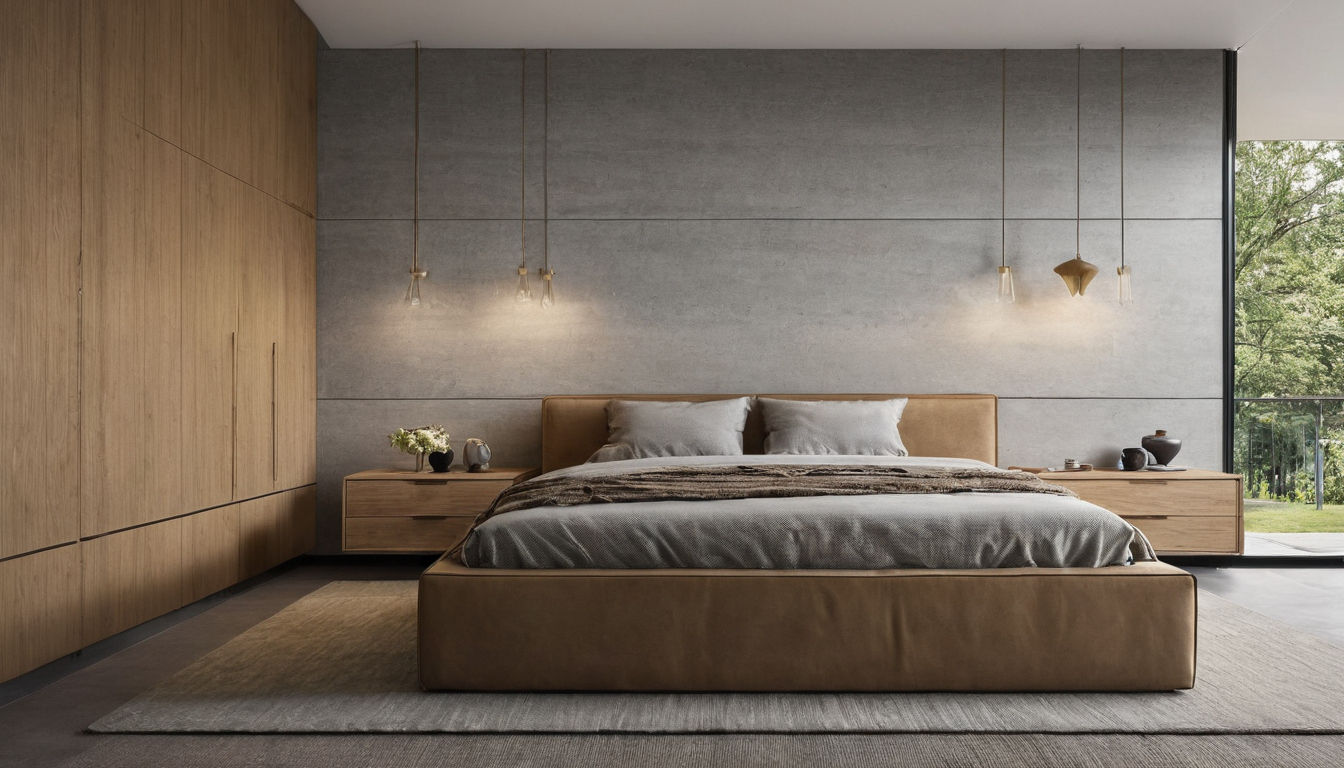
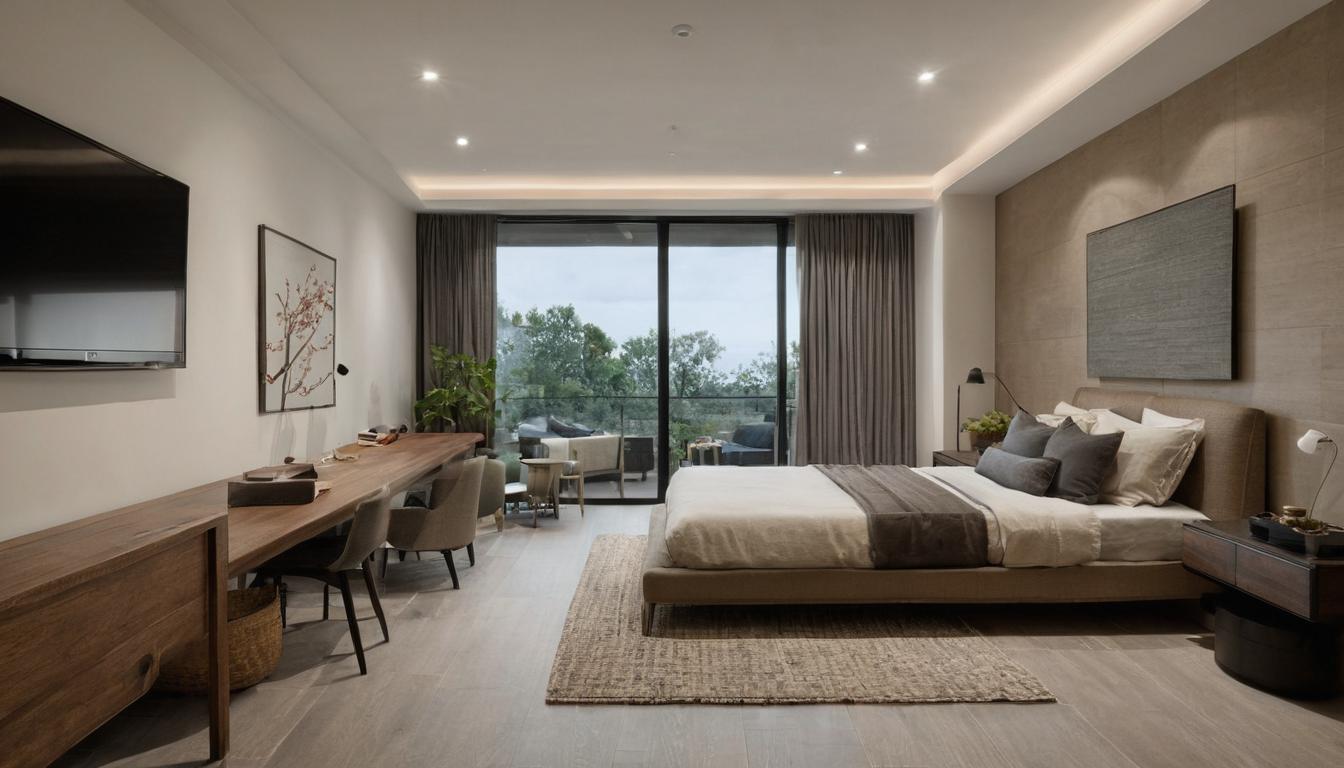
How much furniture in bedroom layouts fits before circulation fails shown as an editorial reference for proportion and finish coordination.
- Reject the layout if a wardrobe door blocks the bedroom door or bed path.
- Reject the layout if a dresser drawer opens only while the user stands in the narrow bed-side route.
- Reject the layout if sliding wardrobe doors save swing space but leave too little access to the interior.
Start with bed size because the bed controls most bedroom furnishing ideas
The bed is the first constraint because it occupies the largest fixed footprint and decides which walls remain usable for storage, sockets, switches, doors, and daily walking routes.
A mattress size is not the same as the real bed footprint
Mattress dimensions are only the starting point. Standard bed-size names refer mainly to mattresses, not finished frame size, and dimensions vary by country and frame design, as summarized in this bed size reference. A slim platform bed may add little beyond the mattress, while an upholstered, sleigh, canopy, storage, or thick-footboard bed can add several inches at the sides, head, and foot.
| Bed choice | Common size to verify | Planning issue |
|---|---|---|
| Twin or single | Often about 38 by 75 inches in the United States, or 90, 100, and 120 cm wide in many European ranges | A bulky frame can still block a closet door in a narrow room |
| Full or double | Often about 54 by 75 inches in the United States; European double widths commonly include 160, 180, and 200 cm | Useful for guest rooms, but tight for two adults if both sides need access |
| Queen | Often about 60 by 80 inches in the United States; South African sizing lists queen width at 152 cm | Usually the best couple compromise when nightstands and storage still need space |
| King | Examples range from 152 by 198 cm in the UK to 193 by 202 cm in the United States | Needs wider walls, wider routes, and stricter nightstand sizing |
| Long or XL formats | Some markets offer 200 cm or longer lengths; South African standard lengths include 188 cm and 200 cm | Can help tall sleepers while creating a foot-of-bed clearance problem |
A nominal bed name does not guarantee identical dimensions across countries or manufacturers. Mattress and bedding sizes may not correspond exactly, and a finished frame can make the installed piece larger than the mattress label.
A king bed may reduce a room more than it upgrades it
A king bed starts to fail when the upgrade consumes the useful room rather than improving sleep. In many compact bedrooms, a queen bed with two practical storage nightstands performs better than a king bed with two narrow tables that cannot hold a lamp, book, phone, and water glass.
Side clearance should follow sleeper count. A single sleeper can often place one side closer to a wall if the open side has a comfortable route. A couple usually needs usable access on both sides, not a sideways shuffle between a mattress corner and a dresser.
The bed wall should be tested before buying matching sets
Matching sets are often proportioned for showroom walls, not interrupted bedroom walls. A queen frame plus two 24-inch nightstands can require roughly 108 inches before breathing space is added. A king frame plus two similar nightstands can push the bed wall toward 124 inches or more, before curtains, outlets, switches, radiators, or window trim are counted.
Mark the finished frame width, headboard width, and nightstand widths on the wall before approving cool bedroom sets. If a switch lands behind the headboard, a socket sits behind a nightstand, or window trim forces one table smaller than the other, the set is controlling the room instead of serving it. Larger suites may absorb these choices more easily, but master bedroom furniture planning still needs the bed wall test before ordering.
Wardrobes and closets need more depth than their catalog dimensions suggest
Wardrobes and closets often make furniture in bedroom plans fail because usable depth includes doors, handles, drawers, hanging clothes, and the person standing in front. In bedrooms without built-in closets, freestanding storage must be planned as an operating zone, not a flat cabinet against a wall.
Hinged wardrobe doors require a different bedroom layout than sliding doors
A full-depth wardrobe for adult hanging clothes is usually about 24 inches, or 600 mm, deep before handles, baseboards, and wall irregularities are counted. Shallow wardrobes of about 14 to 18 inches can work for folded clothes, shoes, children’s clothes, or front-facing hanging rails, but they do not replace a standard hanging closet for adult coats and dresses.
- Hinged doors: give full access, but each door leaf may project about 18 to 24 inches into the room.
- Sliding doors: reduce swing conflict, but tracks add depth and one side remains partly overlapped.
- Bifold doors: reduce the swing arc, but the folded stack still needs side clearance.
- Curtain-front wardrobes: save door space, but fabric looks casual, gathers dust, and needs a suitable rail.
The practical test is direct: open the wardrobe, stand in front of it, pull out a drawer or basket, and confirm that the bed route still works.
Fitted closets can save floor area but increase planning and lead-time risk
Fitted closets can outperform freestanding wardrobes because joinery can run wall to wall, reach the ceiling, bridge awkward alcoves, and avoid wasted side gaps. The tradeoff is commitment. Ready-made wardrobes may cost hundreds to a few thousand dollars depending on size and finish, while fitted joinery often moves into several thousand because measuring, fabrication, fillers, scribing, and installation are included.
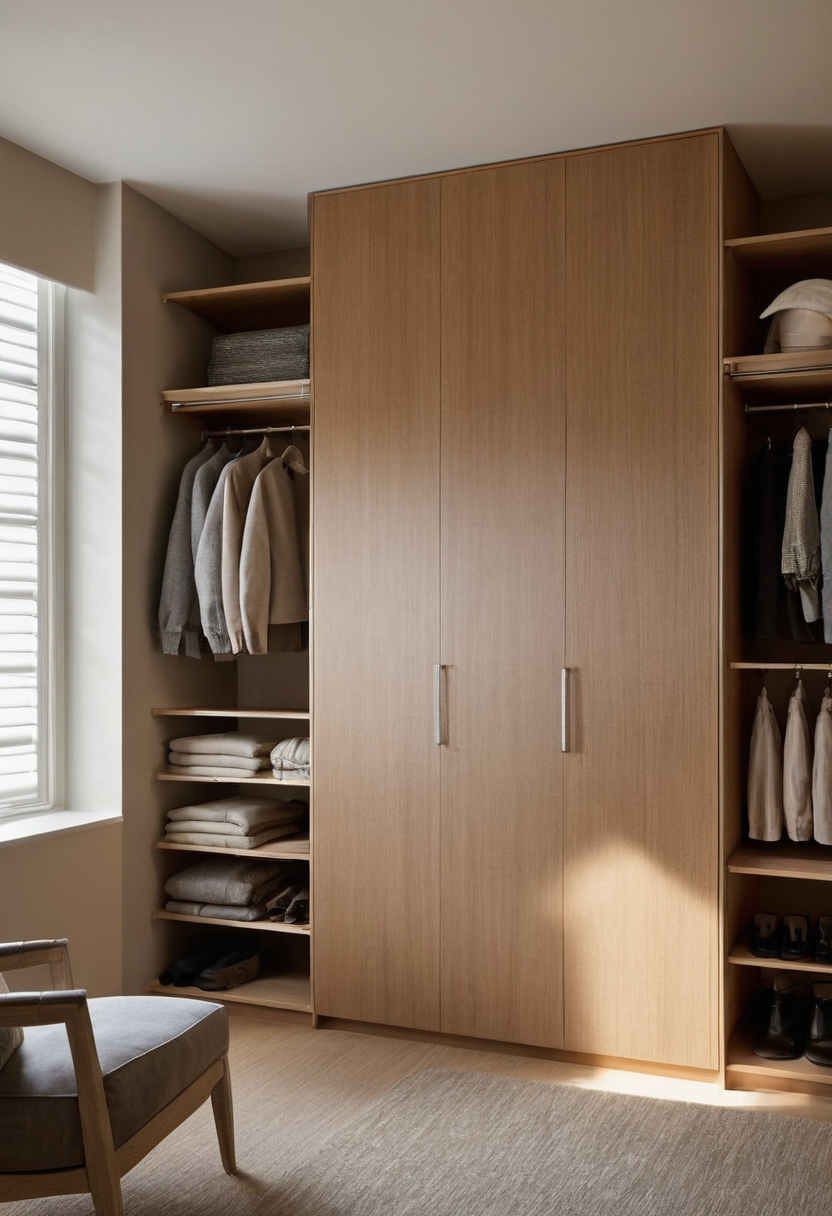
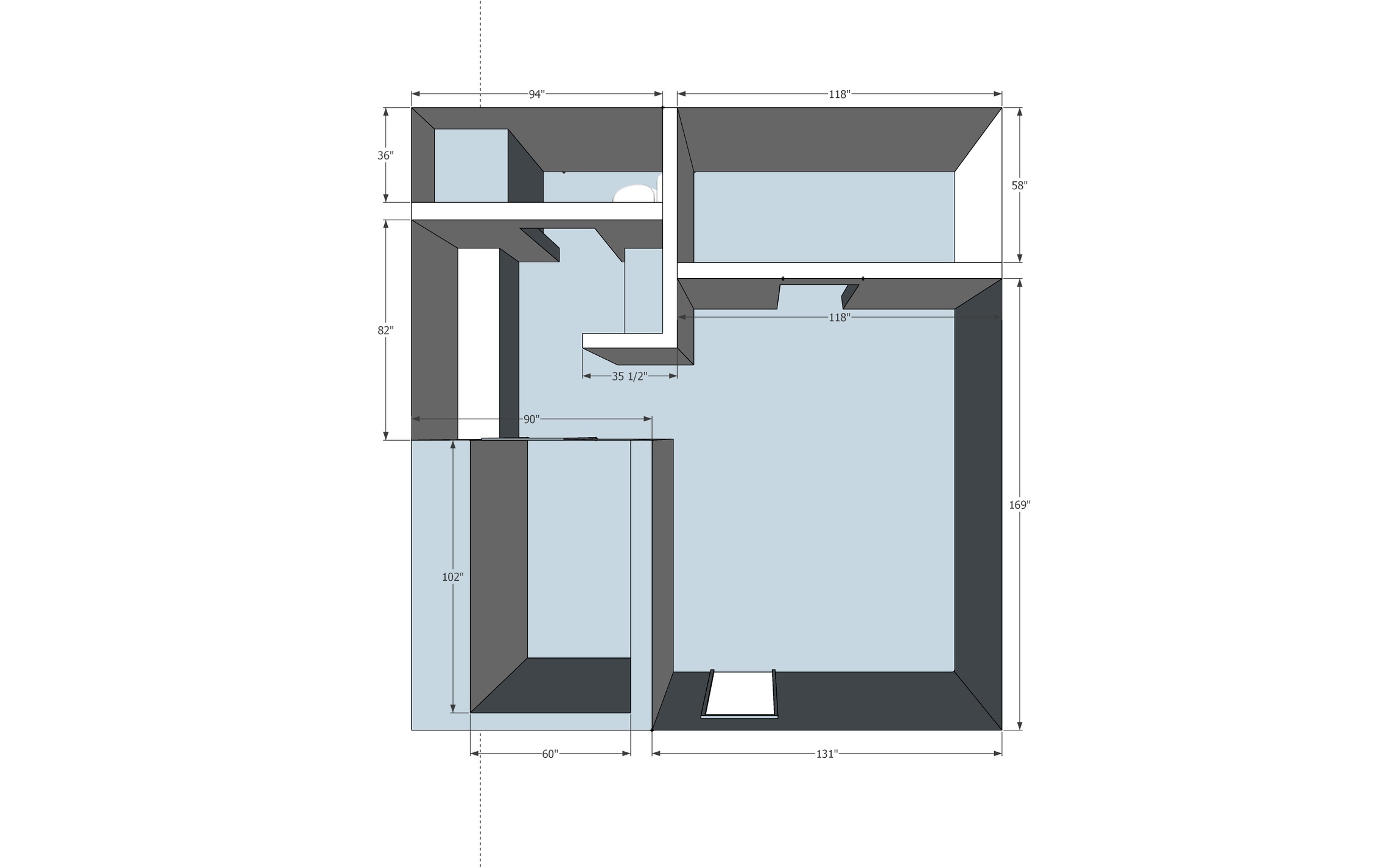
Wardrobes and closets need more depth than their catalog dimensions suggest shown as a planning reference for layout, scale, and material decisions.
- Lead-time risk: stocked wardrobes may arrive within days or weeks, while custom work needs measurement, drawings, production, and installation.
- Site risk: uneven floors, bowed walls, low ceilings, sockets, radiators, and out-of-plumb corners can reduce usable depth.
- Delivery risk: apartment stairs, elevators, narrow corridors, and tight turns can block large carcasses before they reach the bedroom.
Nightstands, dressers, benches, and chairs should earn their floor space
Secondary furniture should be judged by use frequency, clearance cost, and storage value. In small and medium bedrooms, a dresser, bench, accent chair, or pair of wide nightstands is justified only when drawers open fully, paths remain clear, and the piece solves a real daily function.
Nightstand width should follow bed width, wall space, and storage need
Nightstands fail when a matched pair is ordered before the bed wall is measured. A compact nightstand is often 16 to 20 inches wide, a standard one is about 22 to 28 inches wide, and a large bedside chest may run 30 inches or more. Useful depth is often 14 to 20 inches because deeper pieces push lamps, cords, and drawer pulls into the route beside the bed.
Nightstand height should sit close to the top of the mattress, usually within a few inches. Choose the widest nightstand that still leaves a clean gap from trim, drapery, outlets, and the bed frame, then confirm that the drawer can open while a person stands beside the bed.
A dresser is a circulation decision, not just a storage decision
A dresser opposite the bed consumes space twice: once as a cabinet and again as an open drawer. Many bedroom dressers are 18 to 22 inches deep, and full drawer extension can add another 14 to 20 inches in front. A layout that looks acceptable with closed drawers can fail when folded clothes are pulled out.
If the dresser faces the foot of the bed, the remaining aisle must handle walking, bending, drawer use, and sometimes a closet or room door swing. As an accessible-design comparison, the U.S. Department of Justice 2010 ADA Standards specify a 30 by 48 inch clear floor space for wheelchair positioning and accessible dining and work surfaces at 28 to 34 inches above the finish floor or ground. A private bedroom may not follow those standards, but the dimensions show how much operating space real movement can require.
If the dresser blocks the only route, trade width for height. A tall chest, closet drawer stack, wall hooks, or under-bed drawers may store the same category with less floor spread.
Benches and chairs work best in bedrooms with a genuine spare zone
A bed-foot bench is useful only when the bedroom has a spare strip after the main walking route is protected. Common benches are about 15 to 20 inches deep and often 42 to 60 inches wide. At the foot of a bed, that depth can remove the last comfortable turning space.
Accent chairs need more room than their legs suggest. A compact occasional chair may occupy about 26 to 32 inches in width and depth before a person sits down, stands up, or sets a book beside it. Seating earns its place when it supports dressing, reading, nursing, luggage packing, or a consistent routine.
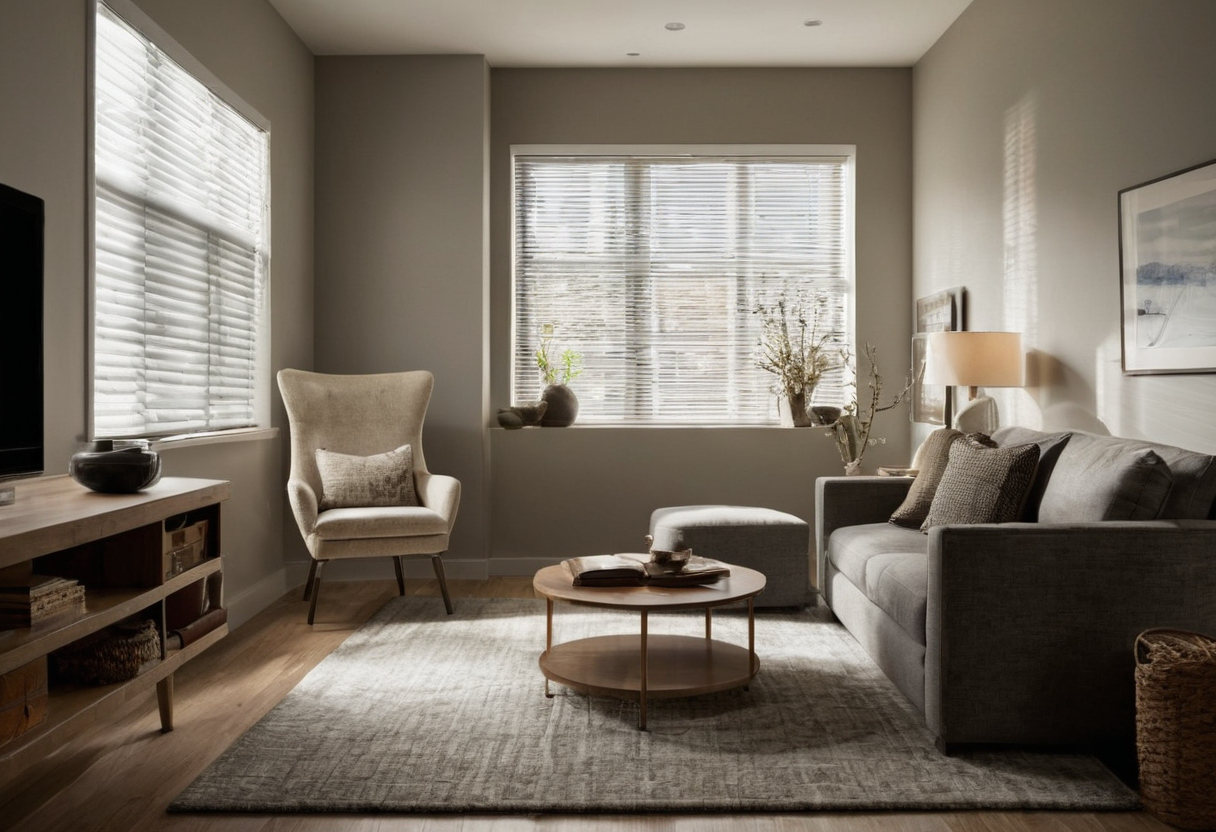
Nightstands, dressers, benches, and chairs should earn their floor space shown with floor, wall, and fixture relationships visible.
- Open every drawer while another person can still pass the bed.
- Sit on the bench or chair without blocking the bedroom door.
- Carry laundry or luggage through the room without turning sideways.
Small bedrooms need storage density before they need more furniture
Small bedrooms usually improve when storage is consolidated into higher-density zones rather than spread across many separate pieces. Apartments, guest rooms, and children’s rooms often work better with under-bed drawers, tall storage, wall-mounted shelves, and fitted closet inserts than with another dresser, chair, or cabinet.
Compare storage by usable volume, not by the number of furniture items. Measure the internal width, depth, and height of drawers, shelves, hanging rails, and boxes, then subtract space lost to frames, plinths, runners, and awkward corners.
Vertical storage protects floor clearance when the wall can carry it
Vertical storage works best when wall structure, fixing method, and daily reach height are planned before buying. Stud walls need fixings into studs or rated anchors suited to the load. Masonry and concrete walls need compatible plugs or mechanical anchors. Lightweight drywall alone should not carry heavy cabinets unless the fixing system is specified and installed correctly.
Tall wardrobes, chests, and bookcase-style storage should be anchored to the wall where manufacturer instructions call for anti-tip hardware, especially in children’s rooms and guest rooms used by families. Wall-mounted shelves above beds should be shallow, securely fixed, and placed outside the normal head and shoulder movement zone.
Under-bed storage only works when drawers can actually open
Under-bed storage is efficient only if operating clearance exists on the correct side of the bed. Side-opening drawers need a clear strip beside the bed equal to the drawer travel plus hand access. Foot-opening drawers need an open zone beyond the footboard. A rug tucked under the bed can also stop low drawers from sliding cleanly.
Lift-up storage beds solve some side-clearance problems because the mattress platform rises instead of drawers pulling out. The tradeoff is weight, bedding disruption, hinge quality, and access effort. Drawer beds are easier for daily clothing storage, but they fail when nightstands, wardrobes, radiators, or walls block the drawer path.
Use proportion rules only after the bedroom passes the clearance test
Decorating rules such as the 2/3 rule, 60/40 balance, and odd-number grouping can make bedroom interior ideas feel intentional, but they cannot rescue an overcrowded plan. Circulation, door operation, storage access, and safe movement should pass first.
The 2/3 rule can size art, rugs, and headboards after furniture is placed
The 2/3 rule usually means one visible element should be about two-thirds the width of the element it relates to. Designers often use it for artwork above a bed, a headboard against a wall, or a rug under a bed group. Art roughly two-thirds the width of the headboard can look connected to the bed instead of floating above it.
The same proportion can help with rug planning, but only after the bed, nightstands, wardrobe doors, and dresser drawers have been tested. A wide rug that looks correct under a queen bed can still fail if the edge catches a wardrobe door or creates a thick transition at the main route. For finish and styling references after circulation is solved, see these broader bedroom interior ideas.
The 60/40 rule helps balance visual weight, not walking space
The 60/40 rule is a composition guide: one material, color, or furniture mass takes the lead while the remaining portion supports it. In a bedroom, warm timber storage might carry the stronger share while pale bedding, slim metal lamps, and a lighter rug reduce visual bulk.
Visual weight does not equal usable clearance. A pale storage wall can still block a door swing. A low bench can still prevent a drawer from opening. Bedrooms with valuable art or collection-grade objects need a more conservative lens than ordinary decoration. The National Park Service Museum Handbook provides guidance for museum collections preservation, documentation, access, and use.
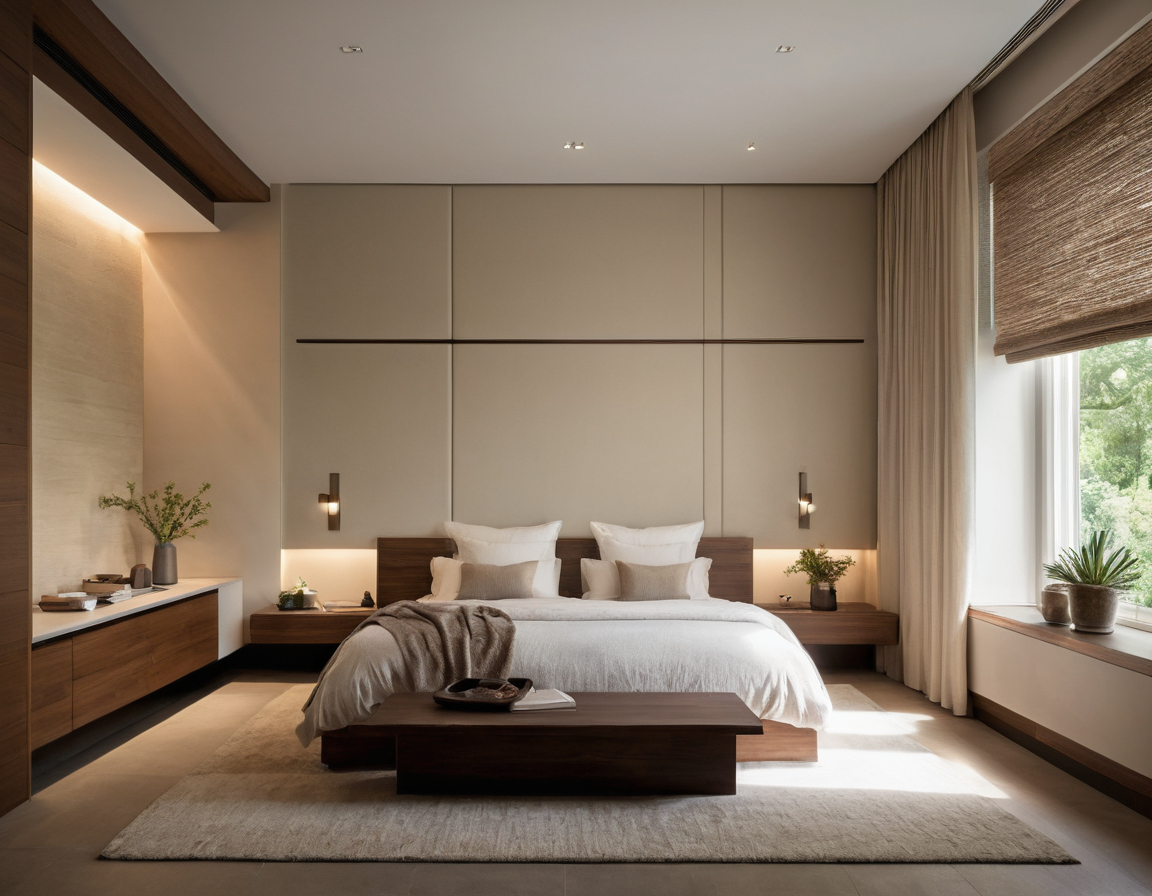
Use proportion rules only after the bedroom passes the clearance test shown as an editorial reference for proportion and finish coordination.
Approve bedroom furniture with a measurement workflow before ordering
The safest way to approve furniture in bedroom projects is to measure the room, draw operating clearances, verify product dimensions, and mock up the largest pieces before purchase. This matters most for online orders, custom joinery, apartments with tight access, and renovation projects tied to fixed delivery dates.
Measure the room and the furniture in the same direction
Start with one consistent orientation. Record each wall, window, door, outlet, radiator, ceiling height, sloped ceiling, alcove, column, and floor level change on the same sketch. Mark door swings and wardrobe-door swings as moving objects, not empty space.
Furniture dimensions online are usually listed as width by depth by height, but product pages do not always explain orientation clearly. Bed width runs side to side across the headboard. Wardrobe width runs along the wall. Dresser depth projects into the room. Chair depth includes the back angle and front legs, not just the cushion.
Before paying, tape the bed, wardrobe, dresser, bench, and chair footprints on the floor. Cardboard templates work better for storage beds, deep drawers, and footboards because they show where knees, bedding, and drawer fronts will land.
Sequence furniture decisions before finishes when dimensions are tight
Furniture decisions should come before final electrical and finish decisions in a tight bedroom. Bed width controls wall sconce spacing, switch positions, nightstand outlets, USB points, reading-light heights, and TV alignment. Nightstand height affects whether a socket stays reachable or disappears behind a drawer box.
Wardrobe decisions affect flooring, skirting, plaster repairs, and paint sequencing. A fitted wardrobe may need level floors, plumb walls, removed baseboards, and a final site measure after plastering but before production. A freestanding wardrobe needs less site coordination, but still needs assembly space and enough ceiling height to stand upright after delivery.
Delivery access should be checked with the same seriousness as the room plan. Measure stairs, landings, elevator doors, corridors, bedroom door widths, and the clear area needed for assembly. Large headboards, one-piece dresser carcasses, and long wardrobe panels can fail in hallways before they fail in the bedroom.
- Enter the room without turning sideways around the bed.
- Make the bed without trapping yourself against a wall or radiator.
- Open wardrobe doors and drawers without moving another piece first.
- Access the window, curtains, sockets, switches, and heating controls.
- Reach the ensuite, balcony, or closet without crossing an obstacle course.
An acceptable compromise is a rarely used suitcase stored under a bed or a chair pulled out only for dressing. An unacceptable obstruction is a dresser drawer that hits the bed, a wardrobe door that blocks the room door, or a bench that must be moved every morning. Check return windows, restocking fees, packaging requirements, and custom-order cancellation terms before committing.